About Leo · Three connected chapters

Developer’s discipline.
Entrepreneur’s perspective.

My path into technology has been shaped by both entrepreneurship and formal Computer Science education.

The short version

Computer Science graduate working toward systems software, and building a business of my own along the way.

Business came first.

In February 2022, I started Leo M. Suppliers as a field-based fleece blanket business. The products were sourced from Botswana with help from my father, while my mother and sister supported field sales. Working directly through communities taught me the value of trust, visibility and customer relationships.

The business was registered with PACRA in June 2022. On 14 September, we opened a physical shop at Plot 98, John Hunt Way in Livingstone. It initially operated as a clothing and bedding store before transitioning into furniture toward the end of that year.

As owner and an active sales representative, I handled customer engagement, ordering, stock decisions, marketing, deliveries and day-to-day operations. I also learned furniture assembly as the product range changed. The business closed in April 2026.

Computer Science connected the pieces.

I began a Bachelor of Science in Computer Science at The Copperbelt University through a special academic calendar on 8 May 2023. After completing the accelerated first-year calendar in December, the cohort joined the mainstream academic calendar in January 2024.

Software became the place where the analytical and the practical met. I finished the degree in 2025, and my work now runs from programming languages and Android apps to IoT telemetry, an operating-system exercise and tools I built because a job needed them.

TongaLang explores how Tonga-based syntax can reduce introductory learning friction. SubTrack BH came directly from running an active Starlink internet service with 37 paying subscribers. CBU-FIND applies Android and cloud services to a practical campus problem.

How I build.

Since 20 October 2026 I have also been completing an Internet of Things internship with CodeAlpha, working through applied sensor, prototyping and reporting tasks. The offer letter is published here.

My process starts with research and documentation. I break the problem into features and relationships, create a working core, test failure paths and then refine the experience. When a project requires unfamiliar technology, I learn it in context and apply it directly.

Hackathons & awards

Prototypes built
under pressure.

Forty-eight hours, a real brief and a working demo to defend at the end of it.

30 Oct – 1 Nov 2026Lusaka, Zambia
Top 6 team

GreenCode Hackathon · Zambia Edition

Garage48 × BongoHive × ESTDEV · 48-hour green-technology hackathon

Took SmartWater Zambia from an idea pitched on stage to a working prototype in 48 hours, then presented it to the judging panel as part of one of the six teams selected for follow-on support.

  • Joined a cross-disciplinary team around a practical water problem and helped scope what a credible prototype could deliver inside 48 hours.
  • Built and iterated on the SmartWater Zambia prototype through Garage48’s validation, prototyping and pitching process with local and international mentors.
  • Pitched the finished prototype to the judging panel and finished in the top six, the group awarded follow-on support and a share of the award fund.

Award

Finished among the six winning teams, earning follow-on support from Garage48 and BongoHive and a share of the €6,000 award fund.

Certificates held

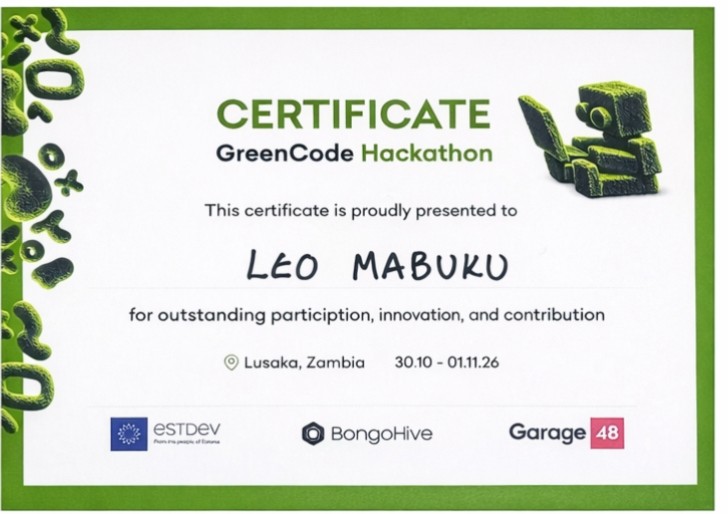
  • Certificate of participation · Leo MabukuGreenCode Hackathon · ESTDEV, BongoHive, Garage48
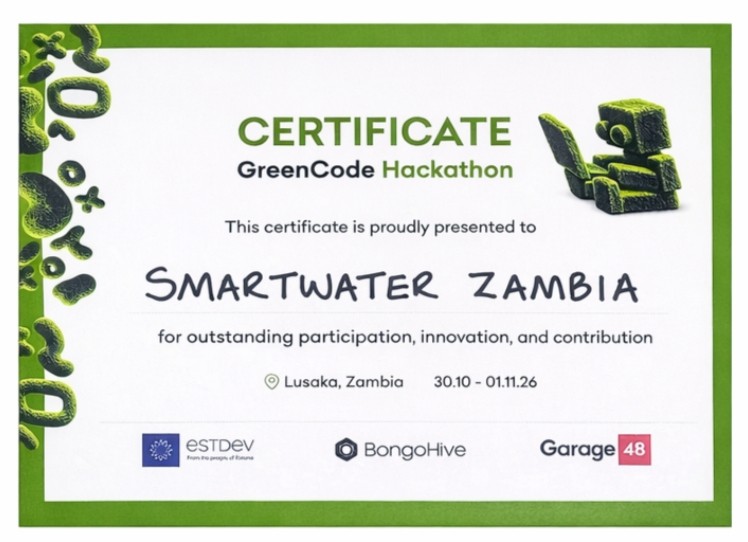
  • Team certificate · SmartWater ZambiaGreenCode Hackathon · ESTDEV, BongoHive, Garage48
Rapid prototypingProduct validationTeam collaborationPitchingGreen technology
GreenCode Hackathon certificate of participation presented to Leo Mabuku, Lusaka, 30 October to 1 November 2026
Certificate of participation · Leo MabukuGreenCode Hackathon · ESTDEV, BongoHive, Garage48
GreenCode Hackathon team certificate presented to SmartWater Zambia, Lusaka, 30 October to 1 November 2026
Team certificate · SmartWater ZambiaGreenCode Hackathon · ESTDEV, BongoHive, Garage48
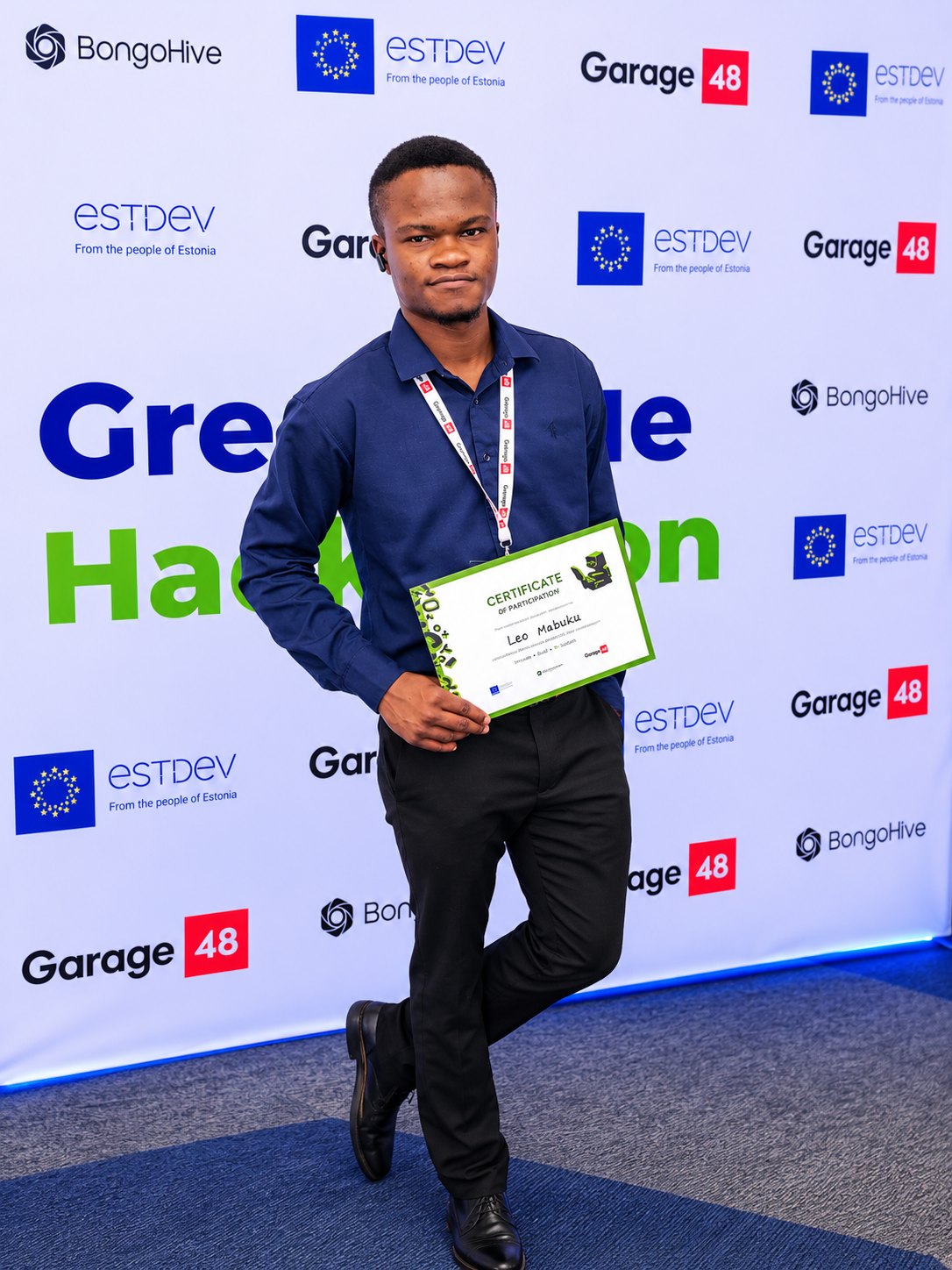
Leo Mabuku holding his GreenCode Hackathon certificate in front of the event backdrop
Holding the individual GreenCode Hackathon certificate at the closing ceremony in Lusaka.
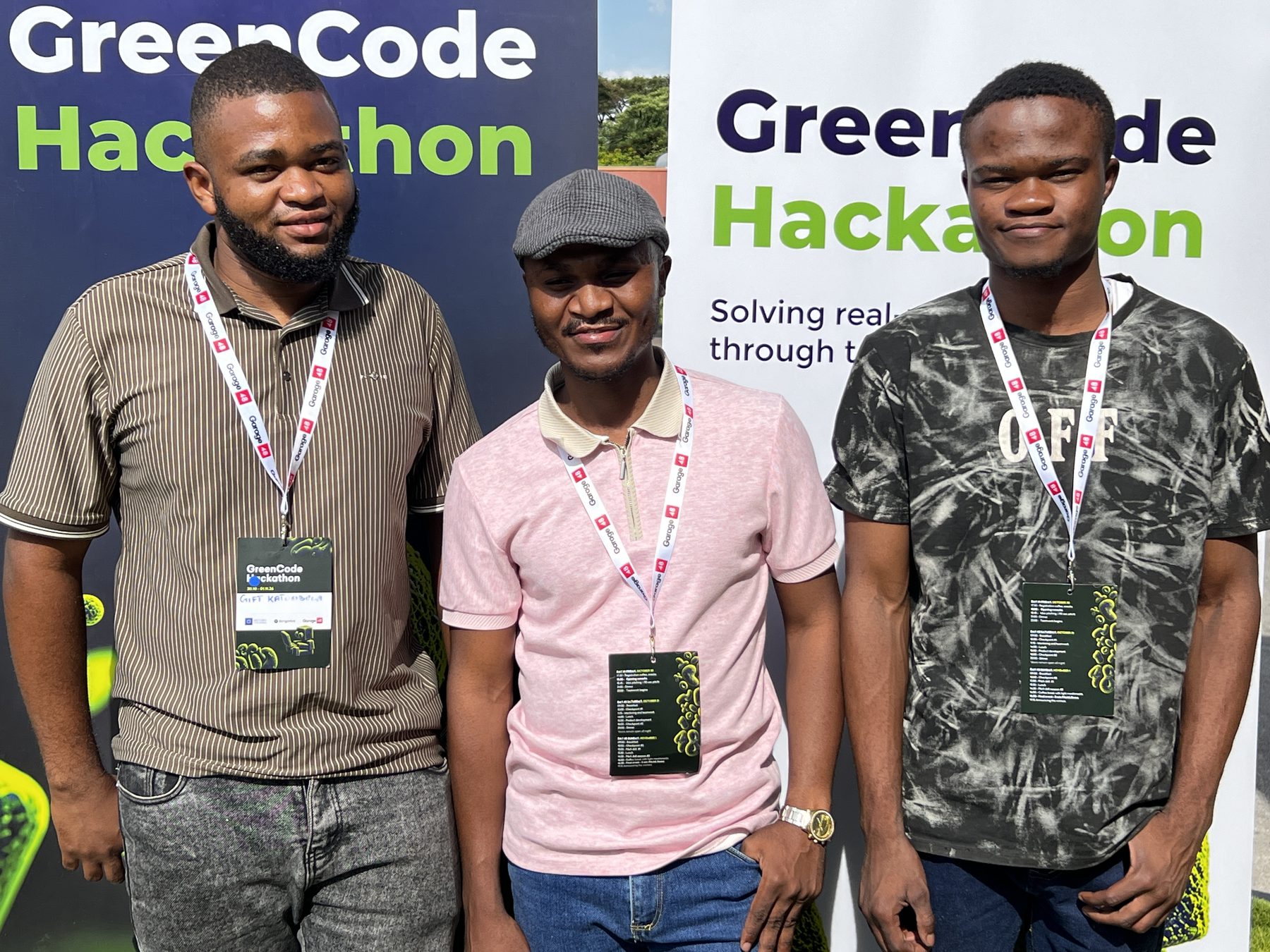
Three SmartWater Zambia team members in front of the GreenCode Hackathon backdrop
The SmartWater Zambia team at the GreenCode Hackathon Zambia Edition, 30 October – 1 November 2026.

Core qualities

What I bring to
the work.

01

Problem analysis

I examine the wider system behind a problem instead of treating only the visible symptom.

02

Fast learning

I learn unfamiliar technologies as projects demand them and apply the knowledge through implementation.

03

Independent learning

My technical development is driven by research, experimentation, testing and troubleshooting.

04

Entrepreneurship

I have built, registered, operated and adapted real business ventures.

05

Adaptability

I adjust technical and business plans when operating conditions or requirements change.

06

Customer awareness

Business experience keeps my software focused on real users, constraints and practical value.

Currently focused on

Building capability
that compounds.

Open to opportunities

Let’s discuss your role,
product or technical challenge.

Open to graduate software roles, internships, freelance builds, hackathons and collaborations, in Zambia or remotely.

Start a conversation

Navigate the system

Where should we go?